Sunday, January 30, 2011

Of Sins, Transgressions and Iniquities

In our daily Shacharis davening, we have this phrase:
ואל תביאנו לא לידי חטא ולא לידי עברה ועון
which when translated means 
"Do not let us come into the grasp of sin, nor into the grasp of transgression and iniquity"
What is the difference between sin (חטא), transgression (עברה) and iniquity (עון)? Sin is an error done by mistake. Transgression is a repeated error that is done out of habit and becomes "normal" to the transgressor. Rav Huna said, "When a person commits a sin and repeats it, it becomes, for him, "permissible" (Yoma 86b).  Eventually, even a transgression can escalate to an iniquity, something done intentionally with knowledge and will.
Sin leads to transgression, which leads to iniquity. We are to be careful with sins and nip them at the bud, before they grow.

Source: Rav Schwab on Prayer

Truth

The first three words that begin the creation of the world in Bereishis 1:1:
בְּרֵאשִׁית בָּרָא אֱ־לֹהִים
and the last three words that seal the creation of the world in Bereishis 2:3:
בָּרָא אֱ־לֹהִים לַעֲשׂוֹת
have special significance. When you take the last letters of each word in the first phrase,  the letters will spell, "אמת". Similarly, when you take the last letters of each word in the second phrase, the letters will also spell, "אמת".  What it means is that Hashem created the world with "אמת", truth, and He sealed it with "אמת", as well. The world cannot stand without truth. Hashem is upholding the world with truth. 

In Parashas Mishpatim, the Jews are given the mitzvah of "מִדְּבַר שֶׁקֶר תִּרְחָק" in Shemos 23:7. One can read it straightforwardly as "You shall distance yourself from a false matter". An alternative reading is to pause between "מִדְּבַר שֶׁקֶר" and "תִּרְחָק", which means you are distancing yourself from Hashem each time you engage in falsehood. Falsehood may apply itself to speaking lies, engaging in business or other matters dishonestly, speaking half truths, causing others to lie when we ask ambiguous questions, etc.

The world today is inundated with falsehood, every single day. Parashas Mishpatim reminds us that falsehood cannot be tolerated in the world that Hashem creates. Engaging in falsehood distances ourselves from the Source of Life.

For a more detailed treatment of this lesson, please view this video at LearnTorah.com.

Tuesday, January 25, 2011

The Nature of Miracles

By Lidia Kozenitzky, available from http://commons.wikimedia.org/wiki/User:Effib

Why are supernatural miracles clothed in the natural? As we learned in Parashas Beshalach, where the splitting of the Reed Sea was not instantaneous, but took a night of strong winds which gradually brought about the split, and where the descent of the mann was clothed in lower and upper layers in dew, which was unnecessary in order to preserve its freshness. In Parashas Vaera, Moshe's staff turning into a serpent was duplicated by Pharaoh's magicians upon their own sticks, and both plagues of blood and frog were also able to be duplicated by his magicians as well.

Why does Hashem bring about miracles in such manners? Why would He impress mankind with his wonders and yet allow them to think that the wonders are simply nature that can be manipulated by mankind?  The answer lies in our freedom of choice to believe. Hashem will never take away our freedom of choice.  Each of us is given the power of choice to believe that Hashem brought those miracles or not.  If we are unclear in our perception of the miraculous events, we will surely try to justify their happening through nature or science or some other explanation. We can see this today in the global events affecting the whole world, which many of us believers, believe that it's part of Hashem's revelation to the world, while many others still try to find explanations and excuses for them, such as global warming, global cooling, solar storms, USDA, etc.

For the sun, the moon and other celestial beings, they perform their tasks exactly as Hashem commands them, because it's very clear to them who's the Boss and what the consequences are should they not follow through with their tasks.  To the rest of us, it's always not so clear as to why we should or should not follow Hashem's commandments as dictated to Moshe Rabbeinu in our Holy Torah.  We have the power to exercise our free will and we need clarity in order to choose wisely.

For a full treatment of this lesson, please watch this video, "The Nature of Miracles".

Thursday, January 20, 2011

Parashas Yisro

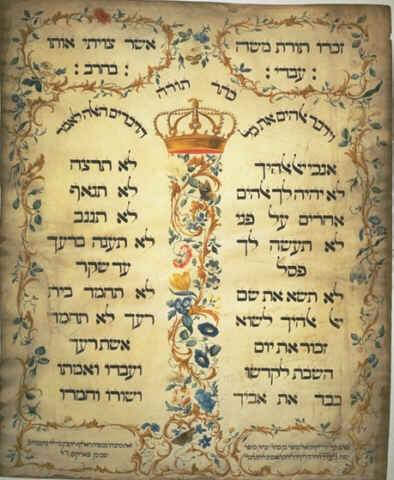
 This 1768 parchment (612×502 mm) by Jekuthiel Sofer emulated the 1675 Decalogue at Amsterdam Esnoga synagogue.

The following are tidbits of Torah, culled from Rebbetzin Jungreis's weekly live shiur.  They are not in any particular order, and I hope I've been able to group them in appropriate categories.
  • It's a great blessing to be able to hear. People don't know how to hear. Is anybody home?  Everybody is sleeping.... Yisro heard.  The whole world heard at the time, but actually they didn't hear. Everyone knew about the Ten Plagues, but the miracles didn't last in their souls. Yisro heard about it too, and it stayed.  Yisro was happy for G-d saved the Jewish people, and even though his people was killed, he said, "Baruch Hashem!"
  • The Ten Plagues in Egypt are manifested today. Plague of Lice -- bed bugs (even in 5 Star hotels), plague of pestilence (dead fish, livestock, birds, etc.), etc. The great and awesome day is coming..  If you look at the plagues that are happening today, you'll see that G-d is calling us. Are we listening? Everything  in this world talks! Everything is a message. 
  • The Torah was given at Har Sinai, a low and humble mount.  Hashem is everywhere, but only to those who are humble enough to let Him into their lives, are these fortunate people able to perceive Hashem is everywhere.
  • At Har Sinai, all Jews were united because of the Torah. The Torah unifies all the Jews.  When Jews are united, nothing will hurt them.  Let the Torah be the one to unify the Jews, not wars.
  • The word for daughter in Hebrew, is Bat (בת). When you add one of Hashem's names, the Yud (י) into the Bat, you will get a home, Bayit (בית). The foundation of a Jewish home is the Jewish daughter (the wife, the mother).
  • I am Hashem your G-d who took  you(singular) out of Egypt, out of bondage.  You, in the singular, means to every single Jew, that G-d is a personal G-d, accessible 24x7.
  • The 613 mitzvos derive from the 10 Commandments. Here's a hint: 6+1+3 = 10.
  • There is no commandment to be "good" in the Torah, because everyone, including the evil people, has his own definition of good.  Just learn from Par'oh, Haman, Achaverosh, etc.  Only, G-d can decide what is good and what is evil.

Watch live streaming video from rebbetzinjungreis at livestream.com
Shabbat Shalom! Gut Shabbes!

Tuesday, January 18, 2011

How Hashem reunited two long lost Holocaust survivors

This is a true story that I received by email, and I'd like to share it with the world. 

The brand new Rabbi and his wife were newly assigned to their first congregation to reopen a Shul in suburban Brooklyn. They arrived in early February excited about their opportunities. When they saw their Shul, it was very run down and needed much work. They set a goal to have everything done in time to have their first service on Erev Puirm. They worked hard, repairing aged pews, plastering walls, painting, etc, and on 8th of the Adar (February 17th) they were ahead of schedule and just about finished. On February 19 a terrible snowstorm hit the area and lasted for two days. On the 21st, the Rabbi went over to the Shul. His heart sank when he saw that the roof had leaked, causing a large area of plaster about 20 feet by 8 feet to fall off the front wall of the sanctuary just behind the pulpit, beginning about head high. The Rabbi cleaned up the mess on the floor, and not knowing what else to do but postpone the Erev Purim service, headed home.

On the way home, he noticed that a local business was having a flea market type sale for charity, so he stopped in. One of the items was a beautiful, handmade, ivory colored, crocheted tablecloth with exquisite work, fine colors and a Mogen David embroidered right in the center. It was just the right size to cover the hole in the front wall. He bought it and headed back to the Shul. By this time it had started to snow. An older woman running from the opposite direction was trying to catch the bus. She missed it. The Rabbi invited her to wait in the warm Shul for the next bus 45 minutes later. She sat in a pew and paid no attention to the Rabbi while he got a ladder, hangers, etc., to put up the tablecloth as a wall tapestry. The Rabbi could hardly believe how beautiful it looked and it covered up the entire problem area.

Then the Rabbi noticed the woman walking down the center aisle. Her face was like a sheet. "Rabbi, "she asked, "where did you get that tablecloth?" The Rabbi explained. The woman asked him to check the lower right corner to see if the initials, EBG were crocheted into it there. They were. These were the initials of the woman, and she had made this tablecloth 35 years before, in Poland. The woman could hardly believe it as the Rabbi told how he had just gotten "The Tablecloth".

The woman explained that before the war she and her husband were well-to-do people in Poland. When the Nazis came, she was forced to leave. Her husband was going to follow her the next week. He was captured, sent to a camp and never saw her husband or her home again. The Rabbi wanted to give her the tablecloth; but she made the Rabbi keep it for the Shul. The Rabbi insisted on driving her home. That was the least he could do. She lived on the other side of Staten Island and was only in Brooklyn for the day for a housecleaning job.

What a wonderful service they had on Erev Purim . The Shul was almost full. The Service was great. At the end of the service, the Rabbi and his wife greeted everyone at the door and many said that they would return. One older man, whom the Rabbi recognized from the neighborhood continued to sit in one of the pews and stare, and the Rabbi wondered why he wasn't leaving. The man asked him where he got the tablecloth on the front wall because it was identical to one that his wife had made years ago when they lived in Poland before the war and how could there be two tablecloths so much alike? He told the Rabbi how the Nazis came, how he forced his wife to flee for her safety and he was supposed to follow her, but he was arrested and put in a camp. He never saw his wife or his home again all the 35 years between.

The Rabbi asked him if he would allow him to take him for a little ride. They drove to Staten Island and to the same house where the Rabbi had taken the woman three days earlier. He helped the man climb the three flights of stairs to the woman's apartment, knocked on the door and he saw the greatest Erev Purim reunion he could ever imagine.

Based on a true story; G-d does work in mysterious ways!

Saturday, January 15, 2011

Of Hashem's revelation to the world

Fire and hail, snow and vapor, stormwind, all fulfill His word (Tehilim 148:8)

Our prophet Yechezkel writes in his sefer, 38:21-23:
"I will summon a sword against him to all my mountains, says Hashem, G-d.  There will be a sword of each man against his brother.  I will carry out judgment against him with epidemic, with blood, and with pouring rain and hailstones, fire and sulfur I will rain down upon him and his legions, and on many peoples who are with him. I will be aggrandized and sanctified and become known before the eyes of many nations, and they will know that I am Hashem."
Today we see many supernatural events, of which are still termed as "natural" disasters by many unbelievers, all over the world.  Volcanic eruptions, earthquakes, floods, fires, snow storms, mass animal deaths have become our top news of the day. Interestingly, these "plagues" happen during the time when we read about the Ten Plagues in our weekly Torah portion.

Rebbetzin Esther Jungreis, of Hineni.org, a holocaust survivor, said in her weekly live shiur in Parashas Bo, that the "natural" disasters of today are like the Ten Plagues in Egypt.  Egypt was the superpower at the time, and they need to be convinced that there is Hashem.  Today, many nations need to be convinced too.

If the supernatural events that we witness today are not enough to convince the Jews and the nations that Hashem is the One bringing them, because He wants the world to know Him, then unfortunately the nations who are against Klal Yisrael will have to suffer when they come to the Land of Israel in the war of Gog and Magog as prophesied by Yechezkel above.

Thursday, January 13, 2011

Does G-d answer everyone's prayer?

 Image licensed under Creative Commons Attribution 2.0 by Juan Reyero

We are commanded by G-d to pray to Him every day.  G-d hears our prayer, however, does He answer our prayer?

In Tehillim 145:18,
קָרוֹב הי לְכָל-קֹרְאָיו לְכֹל אֲשֶׁר יִקְרָאֻהוּ בֶאֱמֶת
Hashem is near to all who call upon Him, to all who call upon Him in truth
Rabbi Shimshon Raphael Hirsch comments that
"Hashem's nearness to all who call upon him can only be perceived by those who call upon Him in truth, who truly mean to have Hashem enter their lives."
In Tehillim 145:19,
  רְצוֹן-יְרֵאָיו יַעֲשֶׂה וְאֶת-שַׁוְעָתָם יִשְׁמַע וְיוֹשִׁיעֵם
The will of those who fear him, He will do (fulfill), and their cries He will hear and He will deliver them.
Siach Yitzchok comments that
"While Hashem hears all who cry unto Him in truth, He answers those who fear Him, who subject their desires to His will."
From the above, we learn that when we truly desire Hashem to be a part of our lives, and we pray to Him sincerely, with all our hearts, we will, G-d Willing, be able to perceive Hashem's closeness to us.  And even then, if we will be ready to subject Hashem's will upon us, will He answer our sincere prayers.

~~~~~~~~~~~~~~~~~~
Source: The Complete Metsudah Siddur

Saturday, January 8, 2011

Of Truth, Faith and Trust


Prayers left for G-d at the Kotel

הַצּוּר תָּמִים פָּעֳלוֹ כִּי כָל-דְּרָכָיו מִשְׁפָּט קֵל אֱמוּנָה וְאֵין עָוֶל צַדִּיק וְיָשָׁר הוּא
"The Rock, perfect is His work, for all His ways are just.  A G-d of faith, without injustice.  Righteous and fair is He" (Devarim 32:4)
The above verse does not say "a G-d of truth", but a "G-d of faith".  Truth and faith are two different things. What is truth? Truth is correctness.  G-d exists and that is the truth.  It is a fact.  Rabbi Akiva said to a certain heretic:
"Just as the jacket attests to its tailor who created it, so the world attests to its Creator."
By the signs and wonders that the Jewish people have witnessed throughout history, they are proofs that G-d exists.

What is faith? Faith (אמונה) is when we are convinced that G-d has a personal relationship with each of His creatures and when we pray to Him, He listens to us.  Faith is when we recognize that G-d personally supervises every intricate detail in His universe, including our personal lives and that He also rewards and punishes.  Faith requires that we trust G-d and to know that everything that happens to us is from G-d and for our own good.

 Video depicting Hashem's Signature all over His creations

The following shiurim, Emunah and Shoes and Nothing Happened by Accident, based on Parashas Bo, are excellent sources of learning more about faith.

What is trust?  Trust (בטחון) is putting our faith into practice.  The real proof of trust is when we are unafraid, as in the verse:
הִנֵּה קֵל יְשׁוּעָתִי אֶבְטַח וְלֹא אֶפְחָד
'Behold, G-d is my salvation, I shall trust and I will not fear' - Yeshayahu (Isaiah) 12:2
Rabbi Chaim Goldberger, of Knesseth Israel, Minneapolis, has developed a successful Six Step Program to Bitachon, which we can apply in our lives.

Sources: The Ishmaelite Exile, Rav Schwab on Prayer

Friday, January 7, 2011

The Shortest Psalm

The shortest chapter in Tehillim (Psalms) compiled by Dovid Hamelech, a"h, zt"l, consists of only two verses, and can be found in Chapter 117. It is appropriate for the messianic age, may that be soon, where all peoples acknowledge only Hashem.  How wonderful and amazing that would be.  Where idolatry will be a thing of the past.  Where truth will be so clear to everyone.  Where Hashem will be exalted by everyone and this will call for a true celebration. It is recited as part of Hallel, a collection of chapters 113-118.

א הַלְלוּ אֶת-יקוק כָּל-גּוֹיִם שַׁבְּחוּהוּ כָּל-הָאֻמִּים
ב כִּי גָבַר עָלֵינוּ חַסְדּוֹ וֶאֱמֶת-יקוק לְעוֹלָם הַלְלוּקָהּ
Praise Hashem, all nations, extol Him, all peoples
For His Kindness overwhelmed us, and Hashem's truth is forever
Praise G-d!

Thursday, January 6, 2011

Love Your Neighbor as Yourself


The commandment to love your neighbor as yourself has been misunderstood by many, including many contemporary Jewish sources.  This topic came up during one of my conversations with a non-Jew, of a Xian faith, who was of the opinion that Jews are obligated to love everyone, and I mean everyone, including our enemies, just like his deity dictated.

If you google "love your neighbor", you will find many Xian sources and some contemporary Jewish sources preaching that Jews should love everyone. But do you want to know the truth?  If you want to know the truth, you should go no further than to find the source of  "You shall love your neighbor like yourself" in the Torah.

The Torah in Vayikra 19:18 states:
לֹא-תִקֹּם וְלֹא-תִטֹּר אֶת-בְּנֵי עַמֶּךָ וְאָהַבְתָּ לְרֵעֲךָ כָּמוֹךָ אֲנִי יקוק
"You shall not take revenge or bear a grudge against the children of your people. You shall love your fellow [Jew] as yourself, I am Ad-noy." - Metsudah Linear Chumash translation
Your people, here, is referring to the Jewish people.  Your fellow, here, is referring to your fellow Jew, and no other. Not being satisfied with this straightforward unadulterated 'pshat' (simple meaning) of the text, the Xian then brought another source to attempt to prove that Jews are obligated to love everyone.  So he brought out this verse, this time, straight from the Torah.

In Devarim 10:19, the verse states:

וַאֲהַבְתֶּם אֶת-הַגֵּר כִּי-גֵרִים הֱיִיתֶם בְּאֶרֶץ מִצְרָיִם
"You are to love the convert, because you were strangers in the land of Egypt." - Metsudah Linear Chumash Translation
Unfortunately, this Xian has interpreted the verse to be "love the stranger", and in his mind, stranger, means any non-Jew.  Well, this is a serious mistake. The correct translation is "love the convert", and convert here means convert to Judaism.
To give further support to the commandment of loving your (Jewish) neighbor as yourself, this is what the prayerbook, The Complete Metsudah Siddur, says as a reminder to Jews at the beginning of the Shacharis (morning) prayer session.
הֲרֵינִי מְקַבֵּל עַל עַצְמִי מִצְוַת עֲשֵׂה שֶׁל וְאָהַבְתָּ לְרֵעֲךָ כָּמוֹךָ
I hereby accept upon myself the positive commandment to love my fellow Jew.


The Chofetz Chaim compiled for himself and Jewry the set of 613 commandments that Jews are incumbent upon.  This is what he has to say about the commandment of "loving your neighbor as yourself".
מִצְוַת-עֲשֵׂה לֶאֱהֹב כָּל אֶחָד מִיִּשְׂרָאֵל כְּגוּפוֹ
It is a positive commandment to bear affection for everyone in Jewry as for oneself.

Note the stress on the word, "in Jewry", and not "in the world", or "in the nations".  The Chofetz Chaim goes on to explain this mitzvah as follows.

as Scripture says, and you shall love your fellow as yourself (Vayikra 19:18).  It is therefore necessary to have as much protective concern for another person's  physical self, his items of monetary value and his esteem, as for one's own.  If someone derives honor from another's disgrace, he has no share in the world-to-come.  And included in this positive commandment is [the religious duty] of making peace between a man and his friend.  It is effect everywhere, at every time, for both man and woman.
An excellent shiur by Rabbi Eli Mansour about this mitzvah can be found here. Click picture.


I end this post with a very uplifting song by Medad Tasa, on the mitzvah of loving one's fellow Jews as oneself.

Tuesday, January 4, 2011

Who are the first peoples to say "Baruch Hashem"?


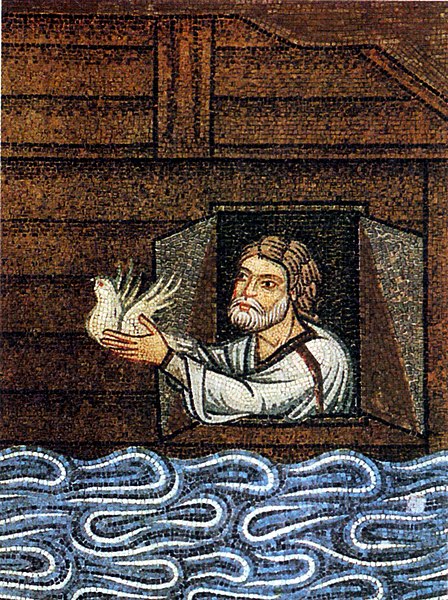
Noah in the ark

Today, you will find most practicing and non-practicing Jews (especially Israelis) utter the phrase "Baruch Hashem" (Blessed is G-d).

Well, the Jews did not create this phrase.  In fact, G-d recorded these phrases that were uttered first by non-Jews. Here are some examples.
In Genesis 9:2:


He then said, 'Blessed be God, the Lord of Shem! Canaan shall be his slave!

He is referring to Noah.
In Genesis 24:2:


He said, 'Blessed be God, Lord of my master Abraham, who has not withdrawn the kindness and truth that He grants to my master. Here I am, still on the road, and God has led me to the house of my master's close relatives!'

He is referring to Eliezer, the servant of Avraham, after he was successful in finding a wife for Yitzchak (Isaac).

Later on, in Genesis 18:10:


He said, 'Blessed be God, who rescued you from the power of Egypt and Pharaoh - who liberated the people from Egypt's power. 

He is referring to Yisro (Jethro), the father-in-law of Moses, who later converted to Judaism.

So, as you can see, the first peoples who blessed G-d whom G-d chose to record in His Word, the Torah, are none other than gentiles.

Torah and Science: About Solar bodies and their purpose


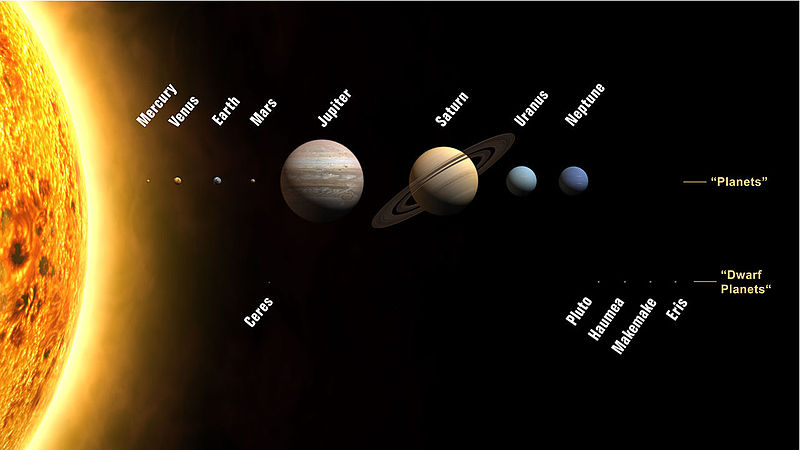
The Solar System


Our wonderful Creator of the Universe, Hashem, created the Sun, Moon, stars and planets and other solar bodies for many reasons, some of which modern science have made claims.


  1. Fossil fuel is actually sunlight stored millions and millions of years ago
  2. Indirectly, the sun or other stars are responsible for ALL our energy.  (Well, they stopped at admitting that G_D is behind the making and placing of the solar bodies. Well, we'll forgive them for now.)
  3. Nuclear energy comes from a star because the uranium atoms used in nuclear energy were created in the fury of a nova - a star exploding.


I was asked a question this past Shabbos about why G_D created so many solar bodies. For what? Well, my answer was that G_D creates everything for a purpose, from the lowliest worm to the galaxies. Now, you will understand from the perspective of scientists why the solar bodies are there. Because G_D uses them to keep us alive. Baruch Hashem! 


Blessed is G_D, the Creator of the Universe who renews His creations daily.

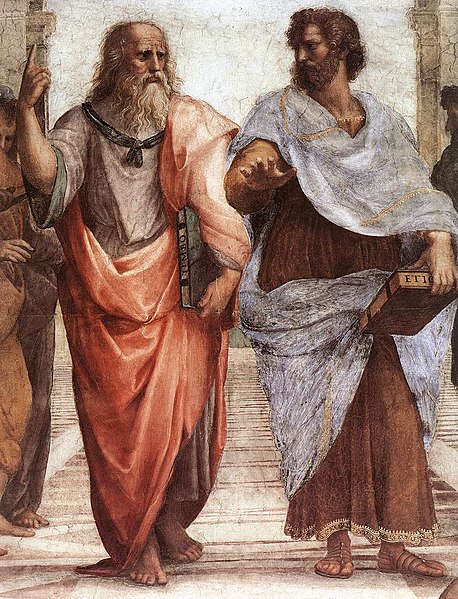
Plato


Plato and Aristotle

Plato related that a prophet who lived during the time of King Morinus conveyed the following Divine prophecy to a philosopher, "You cannot attain Me through your methods (of speculative philosophy). Only through the prophets and the Torah which are My appointed intermediaries to mankind can you obtain true faith in Me."


Rembrant's depiction of Yirmiyahu lamenting the destruction of Jerusalem

According to ancient manuscripts this prophet was Yirmiyahu (Jeremiah), who was contemporary with Plato, and the philosopher referred to is Plato himself. Plato knew that Yirmiyahu was a sage and a prophet.  He is quoted as saying, "I was with Yirmiyahu in Egypt.  At first I ridiculed him and his words, but after I knew him well, I recognized that his words were the words of the Living G_D." -- Otzar Nechmad

---
Source: The Metsudah Kuzari
Related Posts Plugin for WordPress, Blogger...